
Professional Water Softener Repair in Tampa Bay
Water Softener Repair, Water Softener Repair Tampa Bay, water softener service, water softener troubleshooting, hard water repair, water softener maintenance, whole house water softener repair, Heatwave Plumbing
24 Hours a Day, Call NOW!

Water Softener Repair in Tampa Bay
Water Softener Repair from Heatwave Plumbing helps Tampa Bay homeowners address problems with whole-house water softening systems. If your water suddenly feels harder, mineral scale is returning, the system is leaking, or the softener is not regenerating properly, professional diagnosis can help identify the problem.
A water softener contains several components that work together to reduce hardness minerals in household water. Problems with valves, controls, resin, the brine tank, salt supply, plumbing connections, or regeneration can affect system performance.
Heatwave Plumbing provides professional Water Softener Repair in Tampa Bay for homeowners experiencing water softener performance and plumbing problems.
Our team can inspect the equipment, review the symptoms, evaluate accessible plumbing connections, and determine whether repair, maintenance, adjustment, or replacement should be considered.
Table of Contents
- Common Water Softener Problems
- Hard Water Returning
- Water Softener Not Regenerating
- Salt and Brine Tank Problems
- Leaking Water Softener
- Low Water Pressure
- Our Water Softener Repair Process
- Repair vs. Replacement
- Water Softener Maintenance
- Why Professional Repair Matters
- Why Choose Heatwave Plumbing?
- Water Softener Repair in Tampa Bay
- Frequently Asked Questions
- Schedule Water Softener Repair
Common Water Softener Problems
Water softeners operate through a combination of water flow, control settings, treatment media, regeneration, and plumbing connections. A problem with one part of the system can affect overall performance.
Common water softener problems may include:
- Hard water returning to the home
- Water softener not regenerating
- Salt level not changing
- Brine tank problems
- Visible water leakage
- Unusual system noises
- Reduced water pressure
- Control valve problems
- Incorrect system settings
- Recurring mineral deposits
- Excessive or unusual salt consumption
- Declining system performance
Several different conditions can produce similar symptoms. A professional inspection can help determine what is actually causing the problem before repairs are made.
Hard Water Returning After Softening
If mineral deposits begin appearing again or your water no longer seems properly softened, the system may not be operating as intended.
Possible causes can include insufficient salt, incorrect settings, regeneration problems, control valve issues, resin-related conditions, bypass valve position, or changes in household water demand.
Water characteristics can also change, so testing may be useful when the cause is unclear.
Professional troubleshooting can help determine whether the problem requires a simple adjustment, maintenance, component repair, or a more extensive solution.
Water Softener Not Regenerating
Regeneration is an important part of how many traditional ion-exchange water softeners continue reducing hardness minerals.
If the system does not regenerate properly, its ability to soften water can decline.
A regeneration problem may involve controls, settings, water flow, valves, brine movement, electrical components where applicable, or other system-specific conditions.
Because equipment designs vary, troubleshooting should follow the manufacturer’s requirements for the specific system.
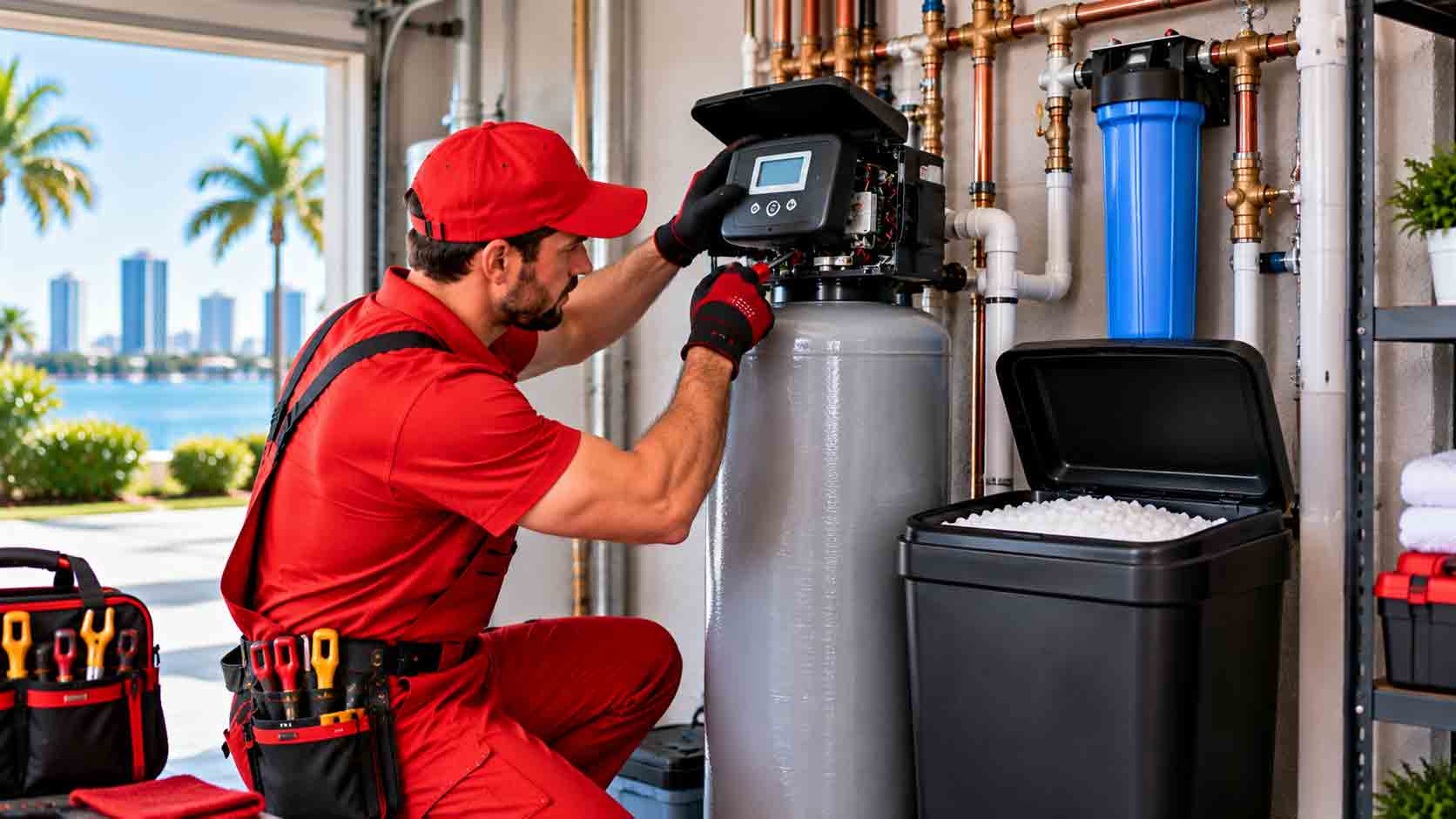
Water Softener Salt and Brine Tank Problems
The brine tank is an important component of many traditional water softeners. It holds the salt or other manufacturer-approved regenerant used during the regeneration process.
If the salt level never seems to change, the system uses an unusual amount of salt, or the brine tank is not operating as expected, further inspection may be needed.
Possible concerns can involve salt bridging, salt accumulation, water levels, brine components, system settings, or regeneration problems.
Always use the type of regenerant recommended for the specific equipment and follow the manufacturer’s maintenance instructions.
- Chlorophenol, calcium hypochlorite, bleach, and other cleaning solutions
- Pesticides, insecticides, and herbicides based on PCB
- By-products of foods and beverages like tannin
- Solvents like chloroform, oils, benzene, and glycols
- By-products of drugs, isopropyl alcohol, and iodine
- Detergents
- Hydrogen sulfide (source of that rotten egg stink)
- Ascetic acid caused by chlorination
- Harmful metals like lead, zinc, chromium, and copper
Call Us Today For your Free Water Test!
Water Softener Leak Repair
Water around a softener should not automatically be assumed to come from the treatment tank itself. Moisture may originate from nearby pipes, fittings, valves, drain connections, or another plumbing component.
Visible leaks should be investigated before they lead to additional water damage or interfere with equipment operation.
A plumber can inspect accessible connections and help identify the source of the moisture.
The appropriate repair depends on the leak location, equipment condition, and plumbing configuration.
Water Softener and Low Water Pressure
If water pressure throughout the home decreases, homeowners may wonder whether the water softener is responsible.
A restriction within the equipment can sometimes affect flow, but low pressure can also originate elsewhere in the plumbing system.
That is why diagnosis is important before assuming the softener needs replacement.
A professional plumber can evaluate whether the problem appears related to the water softener, its valves and connections, or another part of the water supply system.
Our Water Softener Repair Process
Professional Water Softener Repair begins with understanding the symptoms and evaluating the equipment before recommending a solution.
A typical service evaluation may include:
- Discussing changes in your household water
- Inspecting the water softener equipment
- Checking accessible plumbing connections
- Looking for visible leakage
- Reviewing control settings
- Checking the brine tank and salt condition
- Reviewing regeneration-related concerns
- Evaluating visible valves and connections
- Checking for signs of equipment deterioration
- Determining whether repair is practical
- Discussing maintenance or replacement when appropriate
The exact diagnostic process depends on the system design, manufacturer, equipment condition, and symptoms.
Water Softener Repair vs. Replacement
A malfunctioning water softener does not automatically need replacement. Many problems may be repairable depending on the equipment and its overall condition.
Repair may be practical when the system is generally serviceable and the problem involves settings, valves, controls, brine components, connections, or another repairable part.
Replacement may deserve consideration when the equipment has significant deterioration, recurring failures, extensive repair requirements, or no longer meets the property’s water treatment needs.
Important factors include:
- Overall condition of the equipment
- Type of malfunction
- Repair history
- Condition of treatment media
- Availability of appropriate components
- Current household water demand
- Water hardness and treatment goals
- Practicality of continued repairs
A professional evaluation can help you understand the available options without automatically assuming replacement is necessary.
Water Softener Maintenance
Regular maintenance helps a water softener continue operating according to its design.
For many traditional systems, maintenance includes monitoring the brine tank and keeping an appropriate amount of manufacturer-approved salt or regenerant available.
Homeowners should also watch for visible leakage, unusual salt consumption, changes in water quality, declining flow, or unexpected system behavior.
Maintenance requirements vary by manufacturer and equipment type, so follow the instructions provided for your particular system.
Periodic professional evaluation can also help identify plumbing or equipment concerns that may not be immediately obvious.
Why Professional Water Softener Repair Matters
Professional repair can help determine whether a problem originates with the softener itself, its connections, the water supply, or another plumbing component.
Professional evaluation can help with:
- Diagnosing recurring hard water problems
- Identifying visible plumbing leaks
- Evaluating regeneration concerns
- Checking control and valve operation
- Reviewing brine tank problems
- Investigating water flow concerns
- Identifying serviceable components
- Determining whether maintenance is needed
- Evaluating repair versus replacement
Accurate diagnosis helps focus service on the actual problem rather than replacing components unnecessarily.


Water Softener Repair Video
Add a short professional video showing a plumber inspecting the control valve, brine tank, salt level, plumbing connections, and system operation. This provides useful visual information and improves engagement on the service page.
Why Choose Heatwave Plumbing?
Heatwave Plumbing provides professional plumbing and water quality solutions for properties throughout Tampa Bay.
When you need Water Softener Repair in Tampa Bay, our plumbing team can evaluate your equipment, accessible plumbing connections, and water-related symptoms before discussing an appropriate solution.
Our related plumbing services include:
- Water Softener Repair
- Water Softener Installation
- Water Conditioner Installation
- Water Conditioner Services
- Water Treatment
- Water Heater Repair
- Water Heater Installation
- Water Heater Replacement
- Tankless Water Heater Services
- Plumbing Repair
- Leak Detection
- Drain Cleaning
- Pipe Repair and Replacement
- House Repiping
- Sewer Services
- Hydro Jetting
- Faucet Repair
- Toilet Repair and Installation
- Plumbing Inspections
Because water softening equipment is integrated with your plumbing system, a plumbing-focused approach can help identify related water-line or connection problems during service.
Professional Water Softener Repair in Tampa Bay
Heatwave Plumbing provides professional Water Softener Repair in Tampa Bay for homeowners experiencing hard water, system leaks, regeneration issues, brine tank problems, reduced flow, or declining softener performance.
If your water softener is no longer working as expected, having the equipment evaluated can help determine whether service, adjustment, maintenance, or replacement is appropriate.
Contact Heatwave Plumbing
Heatwave Plumbing
10161 49th St N STE A
Pinellas Park, FL
Phone: (813)-510-5600
Frequently Asked Questions About Water Softener Repair
Why has my water suddenly become hard again?
Possible causes include insufficient salt, incorrect settings, regeneration problems, valve issues, resin-related conditions, bypass position, or changes in water demand. Diagnosis can help identify the specific cause.
Why is my water softener not using salt?
Why is my water softener leaking?
Can a water softener cause low water pressure?
Can an older water softener be repaired?
Possibly. Repair depends on equipment condition, the failed component, repair history, parts availability, and whether continued repair is practical.
Does a water softener need regular maintenance?
Yes. Maintenance requirements vary by equipment but commonly include monitoring salt or regenerant, checking the brine tank, and following manufacturer-recommended procedures.
Should I repair or replace my water softener?
The decision depends on the condition of the equipment, severity of the problem, repair history, treatment requirements, and practicality of further repairs.
How do I schedule Water Softener Repair in Tampa Bay?
Schedule Trusted Water Softener Repair Today
Hard water returning, salt problems, leaks, low flow, or regeneration issues can indicate that your water softener needs professional attention.
Heatwave Plumbing provides professional Water Softener Repair in Tampa Bay to help identify equipment and plumbing problems affecting your water softening system.
Our team can evaluate the condition of your equipment and explain whether repair, adjustment, maintenance, or replacement should be considered.
Call Heatwave Plumbing at (813)-510-5600 to schedule Water Softener Repair.
Looking for heating and cooling services? Visit Heatwave HVAC .
Call Heatwave Plumbing at 813-510-5600 today for fast, professional leak detection services!