
Professional Water Softener Installation in Tampa Bay
24 Hours a Day, Call NOW!

Water Softener Installation in Tampa Bay
Water Softener Installation from Heatwave Plumbing provides Tampa Bay homeowners with a professional solution for addressing hard water and hardness-related mineral buildup. Hard water contains dissolved minerals, primarily calcium and magnesium, that can contribute to scale deposits throughout a plumbing system.
You may notice mineral spots on fixtures, scale around faucets and showerheads, or recurring deposits on surfaces exposed to water. Hardness minerals can also accumulate within certain water-using plumbing components over time.
Heatwave Plumbing provides professional Water Softener Installation in Tampa Bay with attention to your property’s water requirements, plumbing configuration, available space, and equipment specifications.
A properly selected whole-house water softener can reduce hardness minerals before the treated water travels to many of the fixtures and water-using appliances throughout your home.
Interested in installing a water softener?
Call Heatwave Plumbing at
(813)-510-5600
or visit our
Contact Us page.
Table of Contents
- What Is a Water Softener?
- Common Signs of Hard Water
- How Does a Water Softener Work?
- Benefits of Water Softener Installation
- Professional Water Softener Installation
- Our Installation Process
- Whole-House Water Softener Systems
- Water Softener vs. Water Conditioner
- Choosing the Right Water Softener
- Hard Water and Your Plumbing
- Water Softener Maintenance
- Why Professional Installation Matters
- Why Choose Heatwave Plumbing?
- Water Softener Installation in Tampa Bay
- Frequently Asked Questions
What Is a Water Softener?
Common Signs of Hard Water
Hardness levels vary by water source and property. The effects may become more noticeable where water repeatedly evaporates or passes through plumbing equipment.
Common signs associated with hard water may include:
- White or chalky scale around faucets
- Mineral deposits on showerheads
- Recurring spots on certain fixtures and surfaces
- Scale deposits around plumbing components
- Mineral accumulation in certain water-using equipment
- Recurring hardness-related residue
- Reduced flow through heavily scaled fixtures
- Visible buildup where water regularly evaporates
These symptoms can also have other causes. Water testing can help determine hardness levels and provide useful information when selecting water treatment equipment.
How Does a Water Softener Work?
Many traditional residential water softeners use a process called ion exchange.
As hard water moves through the system’s resin media, calcium and magnesium ions are exchanged for other ions, commonly sodium or potassium depending on the system and setup.
The resin eventually needs to be regenerated so it can continue reducing hardness. This regeneration process commonly uses a brine solution stored in a separate tank.
System design varies, so homeowners should follow the manufacturer’s operating and maintenance instructions for the specific equipment installed.
Water softening should not be confused with filtration or purification. A softener is primarily designed to reduce hardness; other water-quality concerns may require different treatment technologies.
Benefits of Water Softener Installation
When hard water is a confirmed concern, a properly selected and installed water softener can provide several practical benefits.
Potential benefits include:
- Reduced hardness-related mineral deposits
- Less scale buildup around faucets and fixtures
- Reduced hardness scale on certain plumbing surfaces
- Support for plumbing components affected by mineral scale
- Whole-home treatment from a central location
- Reduced recurring hardness residue
- Water treatment designed specifically for hardness
- A system sized according to household requirements
The actual results depend on incoming water hardness, equipment type, system capacity, installation, water usage, and ongoing maintenance.
- Chlorophenol, calcium hypochlorite, bleach, and other cleaning solutions
- Pesticides, insecticides, and herbicides based on PCB
- By-products of foods and beverages like tannin
- Solvents like chloroform, oils, benzene, and glycols
- By-products of drugs, isopropyl alcohol, and iodine
- Detergents
- Hydrogen sulfide (source of that rotten egg stink)
- Ascetic acid caused by chlorination
- Harmful metals like lead, zinc, chromium, and copper
Call Us Today For your Free Water Test!
Professional Water Softener Installation
Professional installation helps ensure that the water softener is properly integrated into the home’s plumbing system.
The installer needs to consider the main water supply, available space, drainage requirements, electrical requirements where applicable, bypass configuration, equipment accessibility, and manufacturer instructions.
The system should also be sized appropriately for the property’s expected water use and water hardness.
Heatwave Plumbing can evaluate the existing plumbing and installation area before installing a new water softener system.
Our Water Softener Installation Process
A professional Water Softener Installation starts with understanding the home’s water conditions and plumbing configuration.
A typical installation project may involve:
- Discussing your hard water concerns
- Reviewing water hardness information when available
- Evaluating household water requirements
- Inspecting the existing plumbing configuration
- Selecting an appropriate installation location
- Reviewing system capacity and specifications
- Connecting the equipment to the plumbing system
- Providing drainage where required by the equipment
- Checking accessible plumbing connections
- Reviewing system operation
- Explaining basic maintenance requirements
The exact process depends on the selected equipment and the property’s plumbing configuration.
Whole-House Water Softener Installation
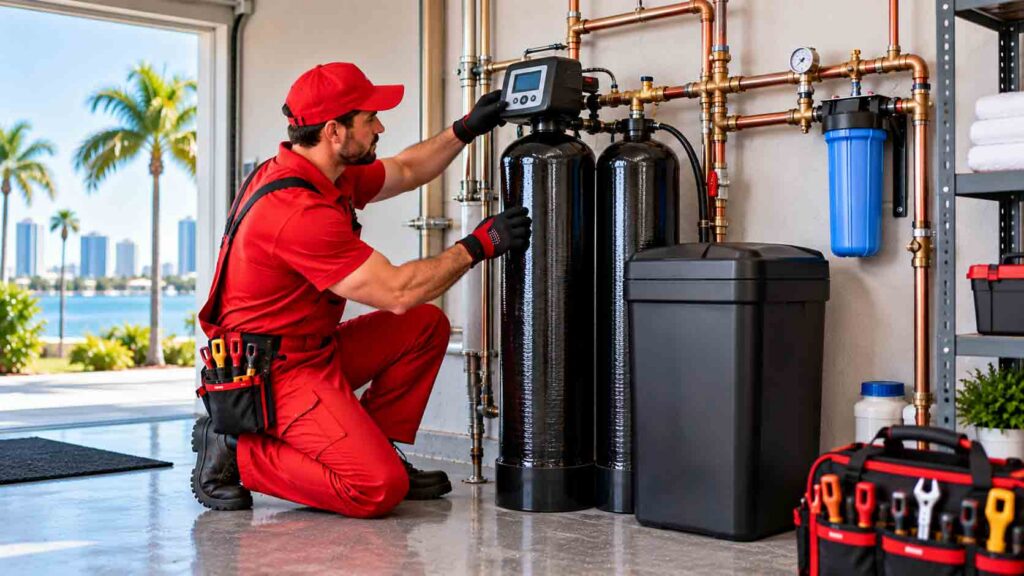
A whole-house water softener is designed to treat water at a central point before it travels through much of the home’s plumbing system.
This means softened water can be supplied to multiple fixtures and water-using appliances, depending on how the plumbing system is configured.
The location of the equipment should provide sufficient space for the main treatment tank, brine tank, plumbing connections, and future maintenance.
System accessibility is important because salt or other approved regenerant may need to be replenished and the equipment may require periodic inspection or maintenance.
Water Softener vs. Water Conditioner
Water softeners and water conditioners are sometimes described as though they are identical, but the terms can refer to different technologies.
A traditional ion-exchange water softener reduces hardness minerals such as calcium and magnesium.
Some water conditioners use alternative technologies intended to manage scale or change how hardness minerals behave without removing hardness in the same way.
The right option depends on your water characteristics and treatment goals.
If the main objective is to reduce measured hardness, understanding the technology used by the proposed system is especially important.
Choosing the Right Water Softener
Correct system sizing helps a water softener operate effectively for the household it serves.
Important considerations may include:
- Water hardness level
- Number of household occupants
- Average household water consumption
- Peak water demand
- Required flow rate
- Existing plumbing configuration
- Available installation space
- Equipment capacity
- Regeneration requirements
- Manufacturer specifications
Selecting equipment without considering these factors can result in a system that is poorly matched to the property’s needs.
How Hard Water Can Affect Your Plumbing
Hardness minerals can leave scale where water repeatedly flows, heats, or evaporates.
This buildup may become visible around faucets, showerheads, valves, and other fixtures. Scale can also develop inside certain plumbing components and water-using equipment.
The severity depends on the hardness level, water temperature, usage, equipment, and length of exposure.
Installing a water softener does not automatically repair existing plumbing damage or remove every existing deposit. However, reducing hardness can help address the source of future hardness-related scale.


Water Softener Maintenance
Water softeners require ongoing maintenance to continue operating as designed.
For many traditional systems, homeowners need to monitor the brine tank and maintain the appropriate level of manufacturer-approved salt or regenerant.
Additional maintenance requirements vary according to the equipment.
Homeowners should follow the manufacturer’s instructions for cleaning, replenishment, inspections, settings, and service intervals.
Changes in water characteristics, excessive salt use, reduced flow, visible leakage, or unexpected system operation can indicate that professional service may be needed.
Why Professional Water Softener Installation Matters
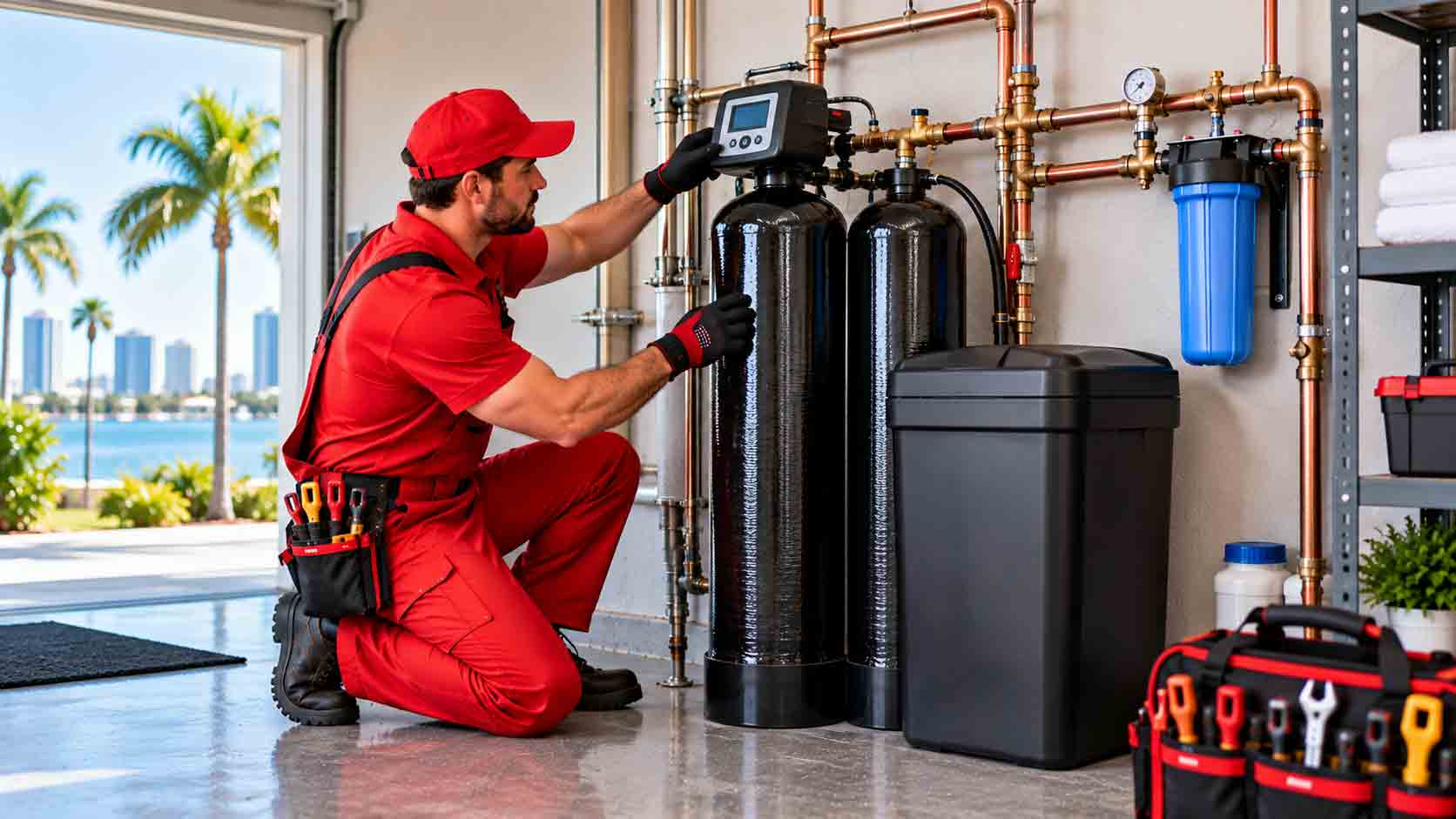
A water softener becomes part of the home’s main plumbing system. Correct installation is important for dependable operation and future maintenance.
Professional installation can help:
- Determine an appropriate installation location
- Integrate the system with existing plumbing
- Provide an appropriate bypass arrangement
- Account for drainage requirements where applicable
- Maintain access for future maintenance
- Review accessible pipes and connections
- Follow relevant equipment specifications
- Check system operation after installation
Installation requirements can vary by equipment and property. Applicable plumbing and installation requirements should be confirmed for the specific project.
Water Softener Installation Video
Adding a professional installation video can help visitors understand how a whole-house water softener connects to a home’s plumbing and what happens during the installation process.
Heatwave Plumbing provides professional plumbing and water quality solutions for properties throughout Tampa Bay.
When you need Water Softener Installation in Tampa Bay, our plumbing team can evaluate the installation area, existing plumbing configuration, and household requirements before installing the selected equipment.
Our related services include:
- Water Softener Installation
- Water Conditioner Installation
- Water Conditioner Services
- Water Treatment
- Water Heater Installation
- Water Heater Repair
- Water Heater Replacement
- Tankless Water Heater Services
- Plumbing Repair
- Leak Detection
- Drain Cleaning
- Pipe Repair and Replacement
- House Repiping
- Sewer Services
- Hydro Jetting
- Faucet Repair
- Toilet Repair and Installation
- Plumbing Inspections
This plumbing-focused approach can be helpful when a water softener installation requires changes or improvements to existing water lines and connections.
Frequently Asked Questions About Water Softener Installation
What does a water softener do?
A traditional water softener reduces hardness minerals such as calcium and magnesium, commonly through an ion-exchange process.
How can I tell if I have hard water?
Scale around faucets, mineral deposits, and recurring hardness-related residue can be signs. Water testing provides more specific information about hardness levels.
Where is a whole-house water softener installed?
It is generally installed at an appropriate central point in the home’s water supply plumbing. The exact location depends on the plumbing layout and equipment requirements.
Is a water softener the same as a water filter?
No. A traditional softener is primarily designed to reduce hardness. Filtration systems are designed for different water treatment purposes depending on their media and technology
Does a water softener remove all contaminants?
No. Water softening specifically addresses hardness. Other water-quality concerns may require appropriate filtration or treatment equipment.
Does a water softener require salt?
Many traditional ion-exchange systems use salt or another approved regenerant. Requirements depend on the specific equipment.
Does a water softener require maintenance?
Yes. Maintenance varies by system but may include replenishing salt, checking the brine tank, inspecting the equipment, and following manufacturer-recommended service procedures.
How do I schedule Water Softener Installation in Tampa Bay?
Call Heatwave Plumbing at (813)-510-5600 or visit our Contact Us page .
Stop Water Damage in Its Tracks
Call Heatwave Plumbing at 813-510-5600 today for fast, professional leak detection services!